Thursday, July 28, 2022

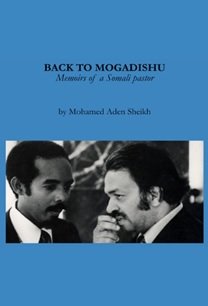
Back to Mogadishu:Memoirs of a Somali Pastor: A BOOK REVIEW

Book: Back to Mogadishu

Author: Mohamed Aden Sheikh
Published :Independently published 
Pages: 389

Publication date: ‎2021

Mohamed Aden Sheikh was a surgeon by profession and educated in Italy. He served a long time as Minister of Health and later for a brief stint as Minister of culture and information for The Military regime . He was a reformist and modernist who wanted to transform Somalia into a modern country along Socialist lines, but his good intention was to no avail for he was finally put in jail for 6 years. His memoir “Back to Mogadishu” chronicles his life and ambition in Somalia, which ended in catastrophe and tragedy of epic proportions.

He was a leftist ideologue and interlocutor of the Military and the civilian secretaries. He became a leftist while studying in Italy since their ideals of social justice and freedom resonated with him, and they supported the rights of the colonized people for self-determination. “The fact that I was an African whose ideal was the liberation of Somalia and the decolonization of the entire continent meant that I almost automatically saw eye to eye with the culture of the left,” he notes.
He got in trouble with right-wing groups while touring Italy to educate them on the negative impact of colonialism, especially the Italians, on the colonized people. The right-wing reported him for “offending the national pride” and “defamation of the Italian state.” He was put on trial and vindicated by the court for not committing acts that may constitute a crime. 

Contrary to popular belief, Mohamed argues that there was “no international plot behind the coup,” and the Military was planning to stage the coup in January but postponed it when the news was leaked. Siad Barre wanted to act, Mohamed states, since Egal wanted him to remove from his job, send him abroad and appoint his position to a northerner, Ainanshe Guled.

Mohamed mentions that General Aidid was nominated to “liaison between the Military and Young technocrats who were asked to draft a rough development project for Somalia. “The technocrats from different backgrounds (doctors, engineers, agronomists, economists, and jurists) teamed up. According to Aden, they presented a project that was instrumental to the achievements of the regime’s early years. He claims they suggested socialistic choices even though they didn’t use the term “Socialism.”

He was an idealist who believed western domination was the reason for the backwardness and that socialism was the only path to rapid social and economic development. He notes that the civilian and military working in tandem was rare in third-world countries.

The nine civil secretaries agreed to work with the military, and their role was merely “technical and administrative,” and their plans were contingent upon their approval. The military retained legislative power, and the civilians were cognizant of their preeminence since they were instigators of the coup. Mohamed thought it was in the country’s best interest if power was concentrated in a few “safe hands.” In the process, he admits, they aided and abetted Siad Barre to become an absolute dictator who, with his unfettered power, led to the country’s demise.

He was of the opinion that continuity and political stability were paramount to reform, thus, the coups must be avoided at any cost.

In 1973, Mohamed argues he and his friend Weyrah, the Minister of Finance, informed the president of the need for a constitution, a parliament, and a political party. He claims their relationship with the Military deteriorated when Somalia joined the Arab league. He argues the decision was shrouded in secrecy, and the military did not consult them; thus, he tendered his resignation. He contends Somalia would be better served as an ally, not as a member of a League who was characterized by constant division and bickering among themselves.

Mohamed Aden argues, quite strangely, that civilians did not know until 1973 of the effects of the draconian laws enacted by the military and that a lot of people were suffering dreadfully in prisons since they were distracted to “improve the life of the entire population.” However, he acknowledges that they didn’t prioritize freedom and individual rights.

Mohamed continued to infuriate the dictator by constantly demanding reform on many occasions. He always believed there was room for reform. When the party was established in 1976, he expected, as promised, the legislative and presidential elections would take place, but nothing has changed, and the regime became ruthless and brutal. Several times he tendered his resignation to Siad Barre, as he claims, and requested not to be re-appointed, and if he did, he would resign publicly. He lost his ministry in a cabinet reshuffle in 1982 but retained his parliamentary job and the party. He drew up an institutional reform with his group of reformers, Gacaliye, Ali Khalif, Warsame Juquf, Dhigic Dhigic, and Ahmed Ashkir Botan. They suggested, among other things, a program to deal with the economic crisis, redefine foreign policy, and create a prime ministerial position. Siad Barre rejected their proposal outrightly. He met with Siad Barre a few days before he was arrested and told him the country needed “drastic measures.” Still, Siad was infuriated by his stubbornness and accused him of “spreading poisonous” and encouraging the young intellectuals to become “disenchanted with the regime.”

Mohamed’s reformist friends left the country one by one, but he decided, as he claims to stay in the country, to confront the dictator and take the risk. Perhaps, he was thinking he would not be arrested since he was a clansman of the dictator. He was arrested along with Omar Haji Masale while visiting Baidoa. Ismail Ali Abokar, Omar Arte, and Osman Jeelle were also arrested in Mogadishu. Mohamed claims he thought the special prisons were “propaganda against the regime” until he was locked for 6 years in Labaatan Jirow maximum prison–one of the many infamous prisons. He felt betrayed by the government he served for 12 years and was jailed for no apparent reason. He was in solitude, anguishing for 6 years, and was even refused books let alone seeing his family. He was released after a farce trial but was put under house arrest until October 1988. 

Mohamed had an ambition and believed there was an opportunity to transform Somalia into a modern state. With the birth of one-party system, he thought they could fight within the party and push their reformist agenda, but their plans and ambitions were foiled and squandered by a myopic military.

He fled to Italy in 1989 after observing the country he was working on his transformation was turned into a family affair and beyond redemption.

The book was translated into Somali by a young progressive leftist, Abdiaziz Aw-Guudcadde, who translated Fanon’s Wretched of the Earth and Freire’s Pedagogy of the Oppressed. Hiil Press will publish the book, and it will come out in 2023.

It’s a memoir of an idealist who had grand ideas and dreams to modernize his country but ended in disappointment and failure. 

It’s a good read for the young generation interested in their history recorded by one of the actors who witnessed the evil of colonization, the birth of nationalism, and the struggle for independence, parliamentary democracy, military dictatorship, and civil war.

FRAMING SOMALIA BEYOND AFRICA’S MERCHANTS OF MISERY: BOOK REVIEW

Abdi Samatar’s new book Framing Somalia Beyond Africa’s Merchants of Misery is another well-reasoned and researched takedown on the status quo of his country, Somalia. Professor Samatar displayed through the pages of this well-timed book, his age-long abhorrence towards the rent-seeking ruling elites of his country whose only aim and competence seems to be and was to fleece the country. According to him, the elites be it political elites, business people or the clergy are capable of only one thing: to enrich themselves at the expenses of the ordinary masses. Once again, Professor Samatar was not shy from deploying another unsparing salvo of searing criticism at the foot of those corrupt elites who are the primary sponsors of the mess that the country is in right now and speaking truth to power. It's a continuation of his relentless critique of bad state of affairs of his country ,the lords of development and corrupt political elite who partnered with them to perpetuate permanent misery of their helpless people. Professor Samatar is one of the few intellectuals who have been speaking and amplifying the voice for the voiceless. You can disagree with his cynicism but he speaks the feeling of millions of Somalis who have no voice .


At the preamble, he briefly touches on his intellectual journey that begets his radical dissent. As a young undergraduate student, he read Alex Haley’s book on Malcolm X. The book was not as he said on Somalia but offered a critical analysis of racialized US society. He claimed that Haley’s book “prompted him” to think differently about the materials published by non-Somalis on Somalia. He then read radical development theories and discovered the Dependency Theory.
At the University of California, Berkeley, where he was doing his PhD , he took course on recent development in African’s political economy and read the works of the likes of Mamdani, Walter, Samir Amin. The course gave him the tools to understand how the Somali studies is detached from the African Studies debates and dynamics of colonial and postcolonial power relationship. Abdi Samatar thereafter started to challenge the dominant framing of Somalis by the orientalist.
He narrates several encounters he had with westerners who set the Somali agenda and saw first-hand of asymmetrical power relationship between them and Somalis. The NGO trade the misery of Somalis while getting hefty salaries and hardship allowance at their comfort zone in Nairobi . Their business depends of the status quo and permanent statelessness. They don’t hire critical Somalis; they only hire those who toe their line. The corrupt political elite support their agenda without questioning while they get their share at the expense of humiliation and suffering of their people.
The framing of Somalis is based on early anthropological works in the north by the British Social anthropologist I.M Lewis. Samatar engaged head to head with Lewis, who contend the identify of Somalis is determined by birth and only way you can understand them is through their clan ,while Samatar disputed and argued that there is no single variable. Lewis who was an indisputable authority and guru of Somali Studies for many years surprised his audacity and label him as “westernized elite”.
Chapter 1, He provides thorough analysis of the dominant school of Somali Studies led by Lewis who offer clan as the single variable analysis of Somali problem, an alternative framework that demonstrates politicized clan as responsible for Somali tragedy. Lewis fails to take stock, professor argues, the impact of colonial rule, commercialization of the livestock, urbanization and emerging of political and economic class in his analysis. He analysis and rebutted some of the works by the Lewis disciples (Mainly Caddaan) who framed social , political and cultural problems along his perspective. Postcolonial leaders failed, professor underscores, to reform colonial institutions and to make identity that transcend tribe and make the state work for all the people.
Somalia somehow became a sort of career for the white men development and state building theoreticians and analysts while there is a visible absence of Somali voices in the debate. The reason for the absence of forceful Somali voices for the future of their country in development debates were many. However, one notable reason was and still is that Somali Students primarily focus on technical skills for gainful employment and don’t learn the critical courses in Social Science that create the possibility of social transformations. He points out the scarcity of libraries, and seasonal scholars who can act as role models is hampering and impending knowledge production that challenges the dominant orthodox. He call the Somalis youth to set up scholarly and political platforms and own their narrative and destiny.
Chapter 2 is an excerpt from his book Africa’s First Democrats. The author divided the Somali ruling elites before the coup into two camps. He argues that one group had a civic agenda and driven by national interest and democratic values. This group led by the first Somali president, Aden Abdille and his second prime minster Abdirizak H. Hussein, have undertaken serious public sector reforms and organized a clean election that they lost and gracefully accepted its outcome. The other group he called sectarian who have been driven by personal interest and consolidation of power that finally led to the military takeover. Lewis interpreted the contestation of the democratic era as a genealogical contest between the two dominant clans: Darood and Hawiye clans. Professor Samatar rebuked this argument forwarded by the renowned British anthropoglot I. M. Lewis and argued, convincingly, that the contestation of the two groups had nothing to do with genealogy but rather competing visions of two groups for the country.
Chapter 3 provides a historical background of the role of Islam in the precolonial, colonial and post-colonial eras of the country. Historically, the Somali ulama were guardians of the Islamic religion. They were the vanguards of the Somali people’s struggle to preserve their religion and sovereignty. They led the way and started the jihad to resist the colonial aggressors. Notable among these ulema that led armed resistance was Sayyid Mohammed Abdille Hassan and his well-known Darvish movement. After the country gained independence in 1960, SYL-led civilian government leaders, professor Samatar claims, were cognizant of not using Islam as a political tool. The Military dictatorship has taken a hostile posture toward Islam by embracing Socialism and subsequent killing of religious leaders who criticized the family law introduced by the regime in 1975. Somalis hitherto were known to practice tolerant Sufism-tinged Islam. But that peaceful and tolerant Islam that the country was known for ever since Islam came to the shores ofMore than a millennia ago, Somalia was fundamentally altered at the advent of radical Wahhabi-oriented Islam imported from Saudi Arabia after the central state collapsed in 1991. These radical militant Islamists who came to the scene after the collapse had cleverly exploited the governance vacuum and established themselves. The role of Islam in public life is changed overnight into something sinister by the emergence of these radical groups who exploited the religion to attain power.
Professor Samatar touches on the fall and rise of Political Islam in Somalia and the US and western plunder by green lighting the Ethiopian invasion of Somalia in 2006 after the moderate Islamic Courts Union chased the notorious warlords from the capital city and much of the southern parts of the country. Ethiopia committed war crimes in Somalia after it invaded the country and got away with it because the West, who encouraged her to invade Somalia in the first place, looked the other way and didn’t want their culpability in the crime to be exposed. He misspells the common perception the West held toward Islam informed by their war on terror and strategic interests.
Chapter 4, Interestingly, he links the piracy problem to state failure debates. He states that the civic and sectarian groups contested in the democratic era, and sectarian groups triumphed, which led to a military coup that eventually facilitated the collapse of the state. The demise of the central Somali state and the ensuing civil war has paved the way for the emergency of many unsavoury players, such as the notorious warlords and Islamist/ terrorist groups that the country is dealing with right now, piracy. He argues that the only effective way to tackle these perennial issues is to rebuild a strong, democratic national government.
Finally, professor Samatar calls to liberate Somali Studies from the dominant school, which is foreign-driven with a little bit of colonial legacy perspective. His take on this is part of his overall criticism of the status quo, whether it is the country's dismal political and social realities as well as the studies of the pressing issues through the lens of the old and stale Somali Studies. He calls a new paradigm to bypass the conventional wisdom that has long constrained fresh thinking and new ideas in the Somali Studies arena.
The current studies of Somali Studies are no longer productive, nor is it adding any meaningful contribution to the debate of how to solve the stubborn and age-old governance problems or otherwise that the country is facing right now. The old barren debate is no longer tenable or useful. According to him, the situation needs a fresh and localized perspective and a new way of thinking and doing things. Professor Samatar emphasizes the importance of re-defining our story in our own terms. It is high time to own our story.
The book is a good read for anyone interested in the debates on Somali Studies. It serves as an Introductory book for Somali Students of social science. It also serves as a repository of hard-earned wisdom from someone who was in the trenches for a long time - for posterity.

Review by: Abdirahman Issa
and Farhan Ashkir

Saturday, April 2, 2022

LABO ISMA SAARIN:XASUUS REEB :GORFAYN BUUG

 Labo Isma saarin waa buug cusub oo dhawaan soo baxay oo uu qoray Xuseen Khaliif X Jaaamac. Qoraagu wuxuu ka warramayaa ururkii hubaysnaa ee SSDF. Waa jabhaddii ugu horraysay ee hub u qaadatay in ay la dirirto kalitaliskii askarta, balse waxa buugga xiisaha u yeelaya ayaa ah in qoraagu goobjoog ahaa oo isaga laftiisu halgankaas ku biiray. Wuxuu ka mid ahaa dadkii ugu horreeyey ee hubka qaatay oo dagaalka aaday. 

Waxaa iyana xusid mudan in qoraagu aanu ku kaaftoomin ogaalka iyo xasuustiisii shakhsiga ahayde uu masuuliyad iska saaray in uu xog badan raadiyo. Baaris iyo baadigoob taariikhda ururka ayuu qoraagu waday muddo ku siman 25 sano, haddana waxa uu soo gudbinayaa dhacdooyin badan oo uu isaga laftiisu goobjoog u ahaa. 


Xaseen Khaliif oo ah qoraaga buugga ayaa ka warramaya dhufsane yaraha ka dhexeeya isaga iyo Jabhadda SSDF. Wuxuu qoraagu ku bilaabayaa markii uu iskoolka ka baxay iyo duruuftii dalka ka jirtay, gaar ahaan wixii qabyaalad iyo qaraabo kiil meesha lagu hayey. In isaga oo Dugsi sare dhammaystay uu Layli Sargaal doontay kulliyadda Jaalle Siyaad. Foolxumadii kuliyadda ka jirtay ayuu qoraagu ina dhex-gaynayaa. In meesha qabyaalad qaawan lagu hayey ayuu ka sheekaynayaa. Carruur aan waxba baran in goobta la soo tubay ayuu ku adkaysanayaa, waliba in qaar ubadkaas ka mid ahi aysan waxba qori karin ayuu ku doodayaa qoraagu! Waxaase Xuseen quus ku riday markii macallin meesha ka tirsani maalin ku waaniyey in uu meesha isaga tago oo mustaqbal tan dhaanta raadsado, haddii kale carruurtaas lasoo bootiyey ayuu mustaqbalkiisu u dabranaan doonaa. Taaasaana keentay sida qoraagu ku doodayo in dad badani isaga tagaan kulliyadda. 

Mar kale waa kan Xuseen oo nolol cusub bilaabay. Markan waa macallin, deedna wuxuu ku biiray kuliyadda caafimaadka. Waa nin dhallinyaro ah, dantiisa ku mashquulsan oo aan siyaasadda dan ka lahayn. Yeelkiise, waxaa dhacday in subax baas la toogtay saraakiishii masuulka ka ahaa inqilaabkii dhicisoobay ee uu hoggaaminayey Cirro. Waa rag ay xuseen isku hayb yihiin. Dhagtaa dhiigga loo daray oo birta laga aslay. Intaas xaalku kuma ekaane, wuxuu qoraagu ka warramayaa in Dowladdu ku xayraantay tolkiis. Dad badan baa xabsiga la dhigay, rag badan baa habeen saq-dhexe gurhaya lagala baxay. Dirsooc iyo duullaan qaawan baa dad gaar ah lagu qaaday oo awood dolwadeed loo adeegsaday. Arrimahaasi aan soo sheegay ayaa sabab u noqday in ardaygii da’da yaraaa uu dirir guddoonsado.

Xuseen waxa uu ku biiray ururkii SSDF dhammaadkii 1978-dii.SSF baa bilowgii magaca jabhadda la oran jiray, 1981-kii baa D lagu daray, kaddib markay ku soo biireen rag bidix ahaa oo koonfurta Yemen ka yimid oo ay hoggaaminayeen Siciid Jaamac Xuseen iyo Cabdiraxmaan Caydiid .Wuxuu qoraagu ka warramayaa rag macno iyo miisaan ku lahaa siyaasadda dalka in ay jabhadda wax ka dhiseen, qaarna gaadaal kaga soo biireen. Waxaan raggaas ka xusi karnaa Cismaan Nuur Cali Qonof (Xoghayihiii caddaaladda bilowgii xukunka askarta) Xasan Cali Mire (Xogahayihii Waxbarashada 1969-1970),) iyo Cumar Istarliin(Duqii Mogadishu 1965-1966). Raggaas kor ku xusan ee aqoonyahanka iyo siyaasiiyiinta ahi waxay hore u sameeyaan urur magaciisu ahaa SODAF. Waxay ahaayeen urur siyaasi ah, laakiin ku taameyey in ay garab ciidan samaystaan. Wuxuu qoraagu xusayaa in raggaasi 8 nin u dirsadeen Israel, si ay tababar u soo qaataan, balse waxaa riyadoodii hakiyey dagaalkii 1977 ee dhexmaray Itoobiya iyo Soomaaliya. Kaddib fashilkii inqilaabka Cirro Cabdullaahi Yuusuf iyo saraakill kale ayaa Kenaya galay, kaddibna SODAF ayaa faraqaha isku xirteen oo ururka SSDF wada dhisteen. Itoobiya ayaa dhul la waydiistay oo halkaas jabhad laga yagleelay. 

Xuseen Wuxuu si faahfaahsan uga warramayaa intuu ka ogaa hawlgaldii dagaal ee ay jabhaddu gashay. Xadgudubaydii ay dawladdii askartu reerka Xuseen kula kacaysay ayaa sababay in dad tiro badani ay jabhadda ku biiraan oo ay ku jiraan saarkiil sare, siyaasiyiin, macallimiin iyo arday badan oo iskoolada dhiganaysay. Muddadii jabhaddu jirtay waxay gashay dagaalo badan, waxaase ugu waynaa kii ay ku qabsadeen magaalooyinka Galdogob iyo Balanbale. Wuxuu qoraagu xusayaa in dhawr jeer ay Ethiopia ka codsadeen in magaalooyinkaas dagaal lagu qaado, balse Ethiopia ay diiday. Baaris dheer kaddib waxa uu qoraagu ogaaday in qabsashada magaalooyinkaas ay ahayd labo mid uun. Waa tan koowaade arrin istiraatiiji ah oo Ethiopia ka timid, ujeedkuna ahaa in Mengiste la heshiiyo Soomaliya, ciidankiisana u qaado Eritrea oo jabhaddii EPLF ay dagaal ba’an ku haysay. “Haddaba si uu hoos u gu dhigo gorgortanka Soomalida ayey Ethiopia goosatay inay dhul Soomaaliyeed qabsato, kaddibna sheegato, si Soomaaliya uga tanaasusho wax badan, hankeeduna u jabo, xitaa in la isku dayo in MSB ka tanaasulo Hawd iyo dhulka Riseef.” Sababta kale ayuu ku sheega in ay ahayd weerar ay ONLF ku qaadday goob shidaalka laga baaro oo shilaabi ku taala, weerarkaas oo laga soo abaabulay Balanbale. Jabinta baaqa qarsoon ee ciidanka Soomaaliya ayaa qoraagu ku tilmaamay in ay ahayd guul wayn oo ay jabhaddu gaartay, taasoo u fududaysay in ay muddo sannado ah ay helaan sirta ciidanka Soomaaliya. Furitaankii Radio Kulmis ayaa qayb libaax ka qaatay dacaayadda jabhadda iyo in dad badan jabhadda ku soo biiraan. Waxaa iyana xusid mudan barnaamiyaddii xiisa lahaa ee Mustafe Xaaji Nuur,dacaayaddii Xirsi Magan ee Laaska Daawada, gabayadii kicinta ee Khaliif Shiikh Maxamuud iyo wacdigii Shiikh Cabdullaahi Macallin ayaa noqday mid xiiso leh oo ay dadku habeenkii si qarsoodi ah ula dhuuntaan, iyagoo ka baqaya nabadsugidda oo habeenkii guryaha dhagaysan jirtay. 

Arrinta xiisaha leh ayaa ah in qoraagu ku dhiiraday in uu u sheego hawlgallada ay ku guulaysteen, kuwa ay ku fashilmeen, khasaaraha gaaray, khaladaadkii iyo xadgudubyadii jabhaddu gashay, sida maxaabiis la dilay, dad ay qafaasheen, dad riyad ah oo si khaldan loo dilay. Tusaale; odoyaal Siyaad Barre la reer ahaa oo la dilay, waxna aysan madaxda jabhaddu ka qaban wayday. Sidoo kale markay jabahaddu qabsatay Galdogob wuxuu Xuseen aad uga naxaysida ay jabhaddu u bililqaysatay magaalada, madaxdu jabhadduna uga aamuseen danbigaas. Waa arrin aan looga baran Soomaalida in ay u bareeraan qirashada gefafkooda. Dhanka kale, wuxuu qoraagu xusayaa in Jabhaddu sannadihii hore ay ku hawlgalaysay hub yar iyo raashin ay Ethiopia ka heli jireen, balse 1981 uu xaalku is beddelay markii dawladda Liibiya ay taageero hub iyo dhaqaale u fidisay. Sababta taageerada Liibiya wuxuu Xuseen ku macneeyay in ay sabab u ahayd taageerada Soomaaliya siisay Masar ka dib markii ay dalalka Carabtu xiriirka u jireen ,kadib hishiiskii Camp David, taasoo ka caraysiisay Liibiya iyo waddamadii kale ee bidixda. Xaalka nololeed ee jabhaddu in uu aad isu beddelay ayuu xusay, in kasta oo uu raacshay in ay dhibaatana keentay. Madaxweynihii Yementa Koonfuureed baa booqasho ugu tagay Qadaafi oo ka codsaday in uu jabhadda taageero, taasoo uu Qadaafi horay ka aqbalay, madaxda jabhadduna ay booqasho ku tagtay, halkaasna waxaa ka samaysmay oo xiriir wangasan oo u dhexeeya Qadaafi iyo Jabhadda SSDF. 

Qaybta dambe, wuxuu kaga hadlayaa sababihii keenay in ay jabhaddu fadhiid noqoto. Wuxuu sheegay in hoggaanka sare ee jabhaddu uusan waxbadan dhaamin kalitaliskii ay ka soo carareen. Waa kan mar kale qoraagu isaga oo ka warramaya sida wax u socdeen: “Tan kale ee isku kay qaban wayday waa in maamul adag ee military ah la dirirnay, ugu danbayna abuurnay mid kale oo isna ku shaqeeya qaab military” - nin Barre la oron jiray oo SSDF ka tirsanaa ayaa sameeyay hadalka ah “ka tag talo xume, u tag talo xume, anna waa tabtaan nahaye”. Nin dhakhtar ahaa oo Dalmar la dhihi jiray ayaa Maalin Xuseen waydiiyay fariqiga u dhaxeeya MSB iyo Cabdullaahi Yusuf aan ka ahayn in ay Cabdulaaahi ilmo-Adeer yihiin.

 Xuseen halganka hubaysan niyad fiican ayuu u hayay, inkasta oo bilowgii sida wax u socdeen uusan la dhicin, balse ma aanu doonayn in uu ka tago ururka, muddo 5 sano ah ayuuna ka tirsanaa, isaga oo mar walba qabay rajo ah in ay wax isbeddelayaan. Maamul xumada hoggaanka sare ayuu sheegay in ay keentay in dad badan ay fakadaan oo dalkii dib u gu laabtaan. 

Wuxuu xusay in Guddoomiyihii jabhadda uu noqday kaligii-talis kale oo dadka isaga taabacsan xililka u dhiiba, kuwa ka aragti duwanna xilalka ka fogeeya. Waxaa “caado u noqotay guddoomiyaha in Sarkaalkii mucaarad noqda uu ku beddelo mid cusub oo jidbaysan ilaa uu mucaarad ka noqonayo.” Cilladda kale ee fashilka keentay ayuu qoraagu ku sheegay in dad rayid ah aysan halganka hoggaamin (marka laga reebo waqti yar oo uu guddoomiye ahaa Mustafe Xaaji Nuur) iyo in hal qof uu xukunka ku raagay oo uusan hoggaanku is beddalin. Wuxuu xusay in aan muddo dheer la qaban shirwaynihii jabhadda, balse ugu danbayn la qabtay sannadkii 1983. Wuxuu sheegay shirwaynahaas in uu ahaa “qimada burburka jabhadda” ka dib markuu gudddoomiyihii jabhaddu golaha dhexe ka buuxshay taageerayaashiisa. Markuu arkay in uusan shirwaynihii isbedel keenin ayuu go’aan kama dambays ah ku gaaray in uu jabhadda isaga tago. 

Wuxuu intaas ku daray in rag aan natiijadii shirwaynaha ku qancin ay abaabuleen gadood ciidan, taasoo ugu danbayn keentay in ciidankii furimaha ku jiray oo wata taangiyo ay Soomaaliya u goostaan. Halkaasna waxaa jabhadda kaga dhacay ”jug culus” oo soo dedajisay burburkii ciidanka jabhadda. Waxayse jabhaddu si kama dambays ah u burburtay markii la xiray guddoomiyhii jabhadda. Sababta ayuu qoraagu ku sheegay in “badi ciidanku ay taageersanaayeen guddoomiyaha jabhadda.” Markii Cabdullahi xabsiga la dhigay ayaa ciidankiigadooday, taasoo sababtay in Ethiopia hub ka dhigis ku samayso. Waxaa hoggaanka Cabdillaahu kaga dambeeyey saddex nin oo rayid ahaa oo kala ahaa Maxamed Abshir Woldo (wuxuu ka shaqeeyay BBC iyo Agaasimihii Radio Mogadishu, wuxuu Masters ka qaatay Columbia School of Journalism bilowgii lixdamaadka) Dr.Xasan Cali Mire (Xasan wuxuu ahaa Soomaaligii ugu horreeyay ee PhD qaata, wuxuuna ka baxay jaamacadda Princeton 1962, wuxuuna noqday xogahayihii Waxbarasha 1969-1970) iyo ninka saddexaad oo ah Ambassador Muuse Islaan (Wuxuu safiir ka noqday dhawr wadan sida Masar iyo Kuwait). Maaddaama ay askartu Cabdillaahi taageersanayd way adkaatay in ay wada shaqeeyaan, waxna way ka qaban waayeen jabhaddii sii dumaysay. 

Cabdullaahi Yuusuf markuu sababta xarigiisa ka hadlayo wuxuu buuggiisa ku sheegay in ay ahayd jawaabtiisii hadalka Goshu Wolde (Wasiirkii Arrimaha Dibadda Ethiopia ) oo ahaa in ay Galdogob iyo Balanbale ay Ethiopia leedahay. Xuseen wuxuu rumaysan yahay in Cabdullaahi aan arrintaas loo xirin. Wuxuu doodda Cabdullaahi ku buriyay in hadlkiisa iyo xarigiisa ay u dhaxaysay muddo sannad ah. Xuseen wuxuu waraysi 1994-kii la yeeshay Goshe Wolde oo uu arrimo badan ka waraystay. Wuxuu waydiiyey sababta uu u yiri Goldogob iyo Balanballe Ethiopia iska Leh? Wasiirku wuxuu ugu jawaabay in uusan xasuusan, balse uu filayo in arrimo maxali ah hadalkaas ku kaliftay. Waxa kale oo Goshe u sheegay in hadalkiisu uusan siyaasadda dawladda ahayn, balse uu isaga gaar ku ahaa, mengiste na uu ka codsaday in uu hadlkaas ka noqdo. Mar uu wayiiday in Cabdulaahi arrintaas loo xiray ayuu u sheegay in aysan sababtaas la xiriirin. Wuxuu wayiiday meesha SSDF laga soo galay? Wuxuu u gu jawaabay “waxaa idin ku dhacay dagaal siyaasadeed ka dhex socday qaaradda Africa ee lala kala saftay jabhadii polisario iyo dawladda Morocco. Dawladaha dhanka bidixda ee Libya hoggaaminaysay waxay taageereen in ururka Qaran Africa ka tiraan noqdo, meesha koox ay Ethiopia hoggaaminaysay ay tiri maya.” 

Khilaafka Ethiopia iyo Libya ayaa saamayn xooggan ku yeeshay SSDF. Waxaa ku dhacday labo daran mid dooron, Ethiopia oo saldhiggii haysay iyo Liibiya oo lacagtii haysay. Dowladda Liibiya ayaa SSDF kula talisay in ay Ethiopia ka guuraan oo meel kastana ay ku kharash garayn karto. Wuxuu Xuseen buugga ku sheegay in ay jirto riwaayad kale oo la xiriirta xarigga Cabdullahi taasoo ah In sirdoodnka Ethiopia ay dhagaysteen Cabdulaahi oo telephone ku hadlaya oo dhahaya; “haddii Liibiya lacagta nago goosato, Ilaahay wuxuu na badin Ethiopia, taasina waa rafaad adduun”. Ugu danbayn ,Xuseen wuxuu ka tagay halgankii uu tacabka badan galiyay bishii December 1983 isaga oo jabhadda ka tirsanaa muddo shano ah, kadib markuu arkay in mustaqbalkii jabhaddu mugdi galay. Xuseen wuxuu sheegay siduu u gu farxay soo geliddii Ethiopia November 1978-dii in uu u gu farxay visahii bixidda, kadib markuu ku marmarsooday in uu arrimo caafimaad u dhoofayo. Gunaanadka waxa uu qoraagu ka digayaa jabhadaynta iyo in qofku dalkiisa qori u qaato. Dhanka kale, waxa uu dowladda farayaa in karaamada mudaawinka la dhowro oo dowladdu xuquuqdiisa ilaaliso, si qofku uga kaaftoomo in uu dagaal iyo dirir wax ku raadsho.

LABO ISMA SAAARIN waa buug xiiso iyo xallad badan. Waana buug xog badan xambaarsan, cid wal oo taariikhda dhow ee Soomaalida danaysana marjac ayuu u noqon karaa.

Dhaliilaha buugga waxaa ka mid ah dhanka tifaftirka oo u baahan in si fiican loo hagaajiyo. Dhanka kale, dhawr meel oo iyana sixid u baahan bay Ishaydu qabatay sida In uu qoraagu sheegay in Xirsi Magan iyo raggii la socday ay Eyl qabsadeen 1989-kii , waxayse ahayd 1988- kii. Wuxuu kale oo sheegay in Xirsi Magan uu SNM ka baxay 1988, kadib markii ay isga iyo Axmed Siilaanyo ku murmeen jawaabtii Siilanayo ka bixiyay dilkii lagu xukumay Ismaaciil Cali Abokor iyo dhawr nin oo kale. Xirsi waqti yar baa ku tirsanaa SNM, 1988 wax jabhad ah kama tirsaneen,waana xilliga isaga iyo raggiisu ay Eyl qabsanayaan. Waxaa kale uu sheegay dad loo xiray inqilaabkii Cirro ay xirnaayeen 20 sanno, waqtiguse intaas waa ka yaryahay, maadaama inqilaabku ahaa 1978, dawladduna dhacay 1991.

We don't need an MP who can't support us in Visa to Turkey!

A few months ago, a group of friends and I visited a friend who had just recently wedded. As we were discussing a range of issues, a well-known MP who lost his seat popped up in the discussion. The MP who lost his seat has been representing his clan since 2009. He was a heavyweight politician who played a major role in successive governments. A friend asked why such an MP who is informed and has a good understanding of the complexity of Somalia states building process was replaced by an unknown novice who is a newcomer to Politics? He was rebuked by two friends from the former MP's clan. "Marabno xildhibaan aan Visa Turkey soo Saari Karin ( We don't need an MP who can't support us in Visa to Turkey)," they said.
I had a convo with friends over the last few years where I asked how do they evaluate their MPs? Their response was almost unanimous, and they said they wanted their MP to do a job that is not his formal job. The MP's job is to make and pass laws and oversee the executive, among other things. The clans expect their MP to buy school fees and medical bills, dig walls, seek scholarships for students from his clan, help their employment in government jobs.His thousands dollar salary can't cover all these expenses. The MPs often spend more on their constituents than they earn through their salaries.The MP doesn't have an office and budget to support his constinucey. Somalia doesn't have the luxury to create Constituency Development Funds.
The clans want their MPs to fill the gap left by the state by building schools, health centres, roads. They rarely expect any service from the state. Some MPs build schools or dig walls for their constituency from their salary to get their blessings at the time of election. Informal role matters more to constituents than passing laws. So as an MP, your are required to perform dual jobs: formal parliamentary jobs like making and passing laws and informal ones. Since the citizens can't get the government service fairly, they are pushed to get support from their clansmen. You will never be able to get a government job, scholarship, or passport without your MP or minister's intermediation.
In every election, new MPs are elected with no experience in Parliament. Few of them are interested In making laws.NGOs sponsor most laws approved by the Parliament. You would never see parliamentarians tabling laws that are important for the country. You would rarely see an MP who can perform both Formal and Informal roles. Some MPs actively participate in parliamentary debates, while some prefer to perform informal roles that are important to their constituents. Others are not good at both Formal and Informal.
The clans want their MP to do informal jobs, while the country needs MPs working on the legislative agenda. The MPs should strike a balance between serving their constituents and the country.

Abaarso school: A cause for Celebration


Jonathan Starr is an American, a former hedge fund manager who quit his job to start a world-class school In Abaarso Village, Somaliland. In his book "it takes a school", he discusses his journey of creating a first-class school in Somaliland. Jonathan was born and raised in Worcester, Massachusetts. He attended Emory University, where he received a B.A. Summa Cum Laude in Economics.
Jonathan's aunt married to a Somali man named Bille from Ceerigaabo.Bill graduated from Sheikh Secondary School, and one of the thirteen students were admitted into American universities in the 1960s. He graduated from Boston University and Syracuse University. Bille was a long-time employee of the United Nations, living in New York City. Jonathan used to attend in his teens a family get-together where he would hear Billeh lamenting that his people in Somaliland couldn't access the good schooling they used to get in the 50s and 60s due to lack of recognition.

Johnathan was pursuing his career ambitions but was consumed by Billeh's dreams to improve the lives of his people back home. Jonathan was running an investment firm and was making good money, but it was not satisfying his curiosity and dreams to create "something special". He decided to return the money to investors and close the firm. He called Billeh and told him he wanted to help the people of Somaliland. They travelled together to Somaliland, where he would meet with some people Billeh knew and told them he committed to starting a good school in Somaliland to "produce future leaders of the country". When he arrived, the first choice of Somaliland students was SOS in Sheikh. Jonathan participated in SOS administrated exam to enlist students for his new school. The students would list SOS and Abaarso as their first and second choices. Most of the Student's choice was SOS as Abaarso was not yet known and was taking the first class. SOS was taking only 50 out 126. The Other students who didn't make it to SOS considered themselves "leftovers".Jonathan had difficulty convincing the students to register for his new school. He told them that the best thing that happened to them was that they were not admitted to Sheikh and promised his school would be better than SOS. Jonathan donated $500,000 from his pocket to build the school, and the first-class started their education in 2009.
He transitioned his students From "rote memorization to critical thinking,". He encouraged his students to ask questions and interact with their teachers. He taught classes on logic to "challenge his student's brains to think, not to memorize."
Some bad behaviours that were normal in other schools, like cheating the exam and littering, were not tolerable in his school. He was adamant about setting high standards for his students. He stated clearly Abaarso's values—tenacity, critical thinking, and integrity —that every Student is required to follow. He introduced community service, sports and extracurricular activities and orphanage tutoring programs. The Student's great performance convinced some of the best boarding schools in the United States to sponsor some Abaarso students to spend one year at their campus or attend summer programs.
The abaarso Student had proven wrong to the doubters who believed they couldn't compete internationally after getting good grades at the boarding schools. Jonatan sold his Student's performance to American Universities. Dozens of students were accepted into American Universities —some of them got accepted at Ivey leagues like Harvard, MIT and Dartmouth.
He explains later in the book some of the tremendous challenges that could cause the school to be closed. Khadar, a Somali -American who had secured the land for the school, had claimed that he owned the school. He spread misinformation that the school teaches something contrary to Islam and converts students to Christianity. Some media run articles accusing Abaarso of diluting the culture and religion. Moreover, some schools that felt threatened exploited religious and cultural fears to prevent entry to good schools.
In recent years, there has been widespread condemnation against Abaarso and Barwaaqo University for allegedly spreading immorality and converting the students to Christianity. I was told some parents pull their children out of school due to believing what is being said against the school or fearing the safety of their children. There was a fuss on social media to close down the school.

Abaarso is one of the rare success stories in Somali regions. It gives me hope to see hundreds of Somalis admitted into the best schools. We need more schools like Abaarso so our children can compete internationally. Nevertheless, nothing is more important than preserving the people's culture and religion; thus, the government should take an oversight role. The parents must forge a close relationship with their children to know what they are taught. The school shall also refrain from anything against the culture and religion of the society it operates.

Sunday, January 31, 2021

Farmajo’s presidency: A personal reflection

In less than two weeks, president Farmaajo’s term will come to an end. In this piece I will reflect on his presidency. Mohamed Abdullahi Farmajo was elected as Somali President in 2017. Farmajo was very popular candidate during the campaign for presidency as he has drawn large support from the youth. The Somali youth played a very pivotal role in Farmajo’s election triumph in 2017. They showed up in large numbers at his rallies; they campaigned him on social media; and later on when the national parliament was convened to cast votes for the country’s next president youth parliamentarians voted for him overwhelmingly. One of the reasons that attracted the youth to Farmajo were the issues that he emphasized on.  He campaigned on issues that had such a resonance and particular appeal to the Somali youth: patriotism, restoring sovereignty, fighting Alshabab, ending pervasive corruption, and so on. He has portrayed himself as a savior for our ailing country. His campaign messages were captivating the youth’s collective imaginations as he taped and exploited their feelings towards the bad state of affairs in their country. His messages were simple to understand by large segments of the society as he didn’t talk about grand vision and lofty ideas to govern the country, but simple slogans and easily digested phrases such as sovereignty and patriotism. 


The members of the national parliament heard loud and clear the clamor of the public for change; and as a result, voted for Mohamed Abdullahi Farmajo to be the next president of the Republic on 8th February 2017.  It seems that his team had a ready communication strategy to maintain their grass-root support that they have engendered during the campaign when they assumed the presidency. This strategy, if you can call it strategy in the first place, was to use the social media in order prop up Farmajo’s image, specially among the youth, and harass those they deemed that they were not enthusiastic about Farmajo and his rule. Right after his election as the eighth president of Somali Republic, multiple social media pages were created on Facebook and Twitter to reach to the youth. In order to utilize this new tool (SM) for their advantage in a new and unsettling ways, Villa Somalia recruited the most active people on social media. Many dubious accounts were created to attack anyone who criticize the government. These pages circulate mostly one single message as it seems distributed them by a single person with multiple accounts in order to create the impression that a lot of people are involved. These kind of tactics in the social media are known “bots.”


Farmajo has shown from get go that he intends to hang on power no matter what. To do that effectively he and his team developed a new culture that was not the custom: to isolate himself from public scrutiny through the free press. He refused to give interviews or address the public even when there was a national calamities such as the major terrorist attacks in the capital; or when his government rendered a former Somali National Army officer, Abdikarim Sh. Muse, to Ethiopia. These kinds of behavior were odd and counterproductive. Not only they were callous and cavalier attitudes to the feeling and the well-being of Somali people whom he swore an oath to look after their interests, but it was also a calculated political move in order to reduce his level of exposure and hide Farmajo’s inadequacy as public speaker. Deep down he and his team knew that maybe he was not apt to the job or he could be embarrassed if the media scrutinize him in a nationally televised setting. So, they have chosen a total and complete media blackout. This was a new low. All of his predecessors were accessible and  were somewhat accountable to the public since they were interacting with the media and forced to answer for their actions and policies. Farmajo was different. He was absent from anywhere that he thought would question him or try to hold him accountable whether it is the parliament, which he emasculated after he got rid of the recalcitrant and independent minded veteran speaker, Mohammed Sh, Osman Jawari. He never availed himself such kinds of public accountability through the free press. He opted not to talk to the public and the media. President Farmajo’s first year coincided with the Gulf crises when Saudi Arabia, UAE, Bahrain cut ties with Qatar. The Somalia government has adopted a neutral position while some federal member states sided with other side, accusing the government it has sided with Qatar. The rift between the federal government and member states widened when FMS formed Council of Interstate Cooperation and suspended their ties with the federal government. Then Farmaajo started a campaign to overthrow the FMS presidents and replace them with loyalists. He succeeded to replace Xaaf of Galmudug, Sharif Hassan of South West  and Waare of Hiirshabeelle. President Ahmed Madobe of Jubbland is the only surviving regional head from Farmajo’s onslaught and Jubbaland paid dearly for refusing to yield Farmajo’s unconstitutional demands of total and undivided personal loyalty. Madobe survived this in large part due to Kenya’s support. This purge, if you will, gave Farmajo an opportunity to taint the image of federalism as a balkanization of the country and consolidate power. The Villa Somalia also tried to destabilize Puntland by organizing protests in major cities and turning the citizens against their government. They also sent money to some development committees,bypassing the government channels in order to undermine the Puntland’s governmental authority and sow division and mistrust among the Putlanders. 


They smartly exploited the clan grievances that is perennial among Somalis in order to  pressure FMS leaders. The first experiment of this kind of unsavory tactic was in Galmudug when they turned the former vice president who hailed from the president’s clan and the speaker of the assembly who is a member of the former prime minster’s clan against the Galmudug president, Mr. Haaf.They did the same thing in Puntland during president Gaas’s reign. They used vice president Abdihakim Amaey (Who was later awarded to ambassadorial job in Ethiopia) to do their bidding. Once again, they utilized clan divisions and secured the support of some clans who felt that they have been sidelined by the larger clans. 


Farmaajo masters the art of diversionary crisis. Whenever NN(Life and Peace) faces a problem, he use trolls to distract the people from government misdeeds. The Farmajo’s government allocates budget for these trolls on the social media on its behalf. These trolls or what Abdirahman A.Warsame called CBB(Cayayaanka Baraha Bulshada)not only harass those in the opposition and anybody they deem anti-NN or Farmajo; they also try to spread an imaginary and unfounded good news about development projects and major undertaking that Farmajo government is doing or building. It is a Soviet scale propaganda machine in the age of social media. “It’s the first time” became their slogan. They try to manipulate the public discourse with disinformation and fake accounts. They deploy trolls on Facebook and Twitter constantly. When the people see, they would believe that the government has many supporters. They monitor all the accounts of opposition leaders. They claim exclusive rights of patriotism and stamped others as “traitors”. To be fair the government did some small-scale projects by repairing and restoring some buildings and monuments in the capital that were destroyed in the Civil War such as the National Theatre, the Sayyid Mohammed’s statue and the Mogadishu Stadium. These modicum and symbolic gesture was billed nothing less as restoring the state itself while  the government doesn’t give priority to the bigger issues like security, social services, and job creation. Finally, Farmajo’s grandiosity his dictatorial tendencies is something that needs to be touched upon. Just like old military dictatorship days, the portrait of the president hangs on everywhere. His paid social media trolls sing his praise and personal glory on social media. You will be forgiven if this reminds you, “Guulwade Siyaad Aabihii Garashada Gayigayagow!”  Farmajo’s cult of personality has become a vivid and disturbing reminder of not so good old days.  His Mundus Operandi is either with us or against us, my way or the highway is off-putting, to say the least. His stormy tenure will be known to what it lacks: compromise and consensus, which is detrimental to the unity of the country.

Monday, January 18, 2021

HASSAN M. ABUKAR: A TRIBUTE

From Allah we come and to Him we return. Geeridu nimaanad garanayn iyo Geeljiray ku wacan tahay , is a Somali lamentation about death, which roughly translates, “The news of death is less painful if the passing is about an unknown person or a camel herder.” Life is a precious thing. We, humans, as we all know but conveniently forget, have a fleeting moment on this earth. 

All of us have a choice to make while kicking and munching while alive. Some choose to pass through life as what the American author and motivational speaker Les Brown called “lived but not used up” These categories of the living lived but never made their mark on this planet. They never shared themselves with the rest of humanity with their ingenuities, acumen, talent, leadership skills, or any other God-given attributes that they might have when they were walking among the living; while others lived every day of their life in the true sense of Mr. Brown’s dictum. In other words, they were “used up” when they were alive. We felt their presence. To say it another way, they were useful. They touched us while alive with their kindness, generosity, or contributed to humanity in so many beneficial ways. One of those “used up” people was a departed dear friend whom we lost a few days ago. 

On 5th January 2021, my friend and mentor, Hassan Mohamed Abukar, passed away in Phoenix, AZ. I read the news of his death on Facebook and still cannot process that he is no longer with us. He departed too soon from us when we badly needed his pen to hold those in power to account. Hassan was a decent, kind, and humble human being. Somalia has lost one of its finest, a giant and towering intellectual.

Hassan was born in Afgooye, 30 KM south of Mogadishu, in 1960. He moved to Mogadishu with his mother and sister in the 1960s and attended Macallin Jaamac elementary and intermediate School. In 1978, he graduated from Bendadir Secondary School. After graduating, he got a job at Somali Airlines and moved to Cairo, Egypt. In 1980, he went to the USA to pursue further education. He did his BA in Political Science and Government (1980-1985) and  MA in International Relations (1985-1986) at Ohio University. He did another MA in Political Science and Government (1986-1989) at the University of California, San Diego (UCSD), where he also pursued his PhD.

Hassan started writing blogs in 2009 and became a widely read columnist and a regular contributor to Wardheernews.com, where he was also WardheerNews Editorial Board Member. He was a prolific writer, a master storyteller with a great sense of humour. He used to write on a wide range of issues, including Somali political and social issues. Hassan’s writing style was unmatched by any other Somali writer. His writing standout because of his wit, humor, simplicity, and clarity, and above all, speaking truth to power.

I always looked forward to his interesting articles that pushed the envelope with inimitable clarity, depth, and balance. He wrote numerous investigative pieces that irked corrupted politicians. He was not shy to name and shame and expose the corruption and mismanagement that crippled our country for decades. Hassan was a role model for many young aspiring writers. He supported young writers and helped many edits and proofread their writings. He was easily approachable and always ready to offer advice to anyone who approached him. He left many interesting articles and essays, but Mogadishu’s Memoir is his masterpiece. He recollects Mogadishu’s life in the 60s and 70s as a young man coming of age. I read the book two times and awed by his sharp memory of remembering people, places, and events. His plain, lucid middle-of-the-grade English was something that everybody, with those high degrees and those of us who learned English in one-room “private” schools back home, could understand. In other words, he had ways with words. His erudition was second to none.

Hassan was an urbane, sophisticated, and high-calibre intellectual but humble and down-to-earth person at the same time. He had that rare quality of putting people at ease. He did not radiate haughtiness and knows all attitudes that seem like the hallmark of the learned Somalis, especially those who spent many years in the diaspora with degrees to boot. His sense of humour was irresistible.

Through his writings, he preserved an important part of our history for the generations who never had the pleasure and the experience of living a peaceful and united Somalia. And also, to those who will come after us. For this, we owe him a great deal of gratitude. May Allah reward him with the highest Jannah.

He had involved in many voluntary and community works. When many Somalis fleeing the civil war settled in San Diego, he co-founded a non-profit organization that provides legal support and interpretation services to Somali immigrants. He was also instrumental in establishing the Somali North American Imams Association, and he later became the association's executive secretary.

I was introduced to him by his childhood friend through email in 2011, and since then, we have become close friends. We used to contact regularly through Email, Facebook, and what’s up. The last time I chatted with him was on 5th December 2020. I wish I could have said goodbye one last time. I met him in 2018 when he returned to the country after 30 years of absence. Villa Somalia offered him a speechwriter position, but some staffers who felt threatened refused to give him a chance to serve his country. He abruptly left Somalia and wrote a scathing piece on how things fall apart as he arrived in Mogadishu.

My meeting with Hassan was very brief and lasted a few hours. He returned a few months later to participate in the Mogadishu Book Fair. He gifted me a copy of his book  "Mogadishu Memoir ". He Autographed the book" to Abdirahman, a friend, and Abti". He used to call me Abti since his mom hails from Puntland, where I am also from.  After the book fair, he stayed behind, giving me a chance to have a good time with him. I enjoyed his company, and he gave me valuable writing advice. He informed me that he had finished a book on Somali families in the Diaspora and was planning to publish it.

Hassan also wanted to write a book on how Mogadishu fared over the last three decades. I’m grieved that his books wouldn’t see the light of day. For that and many other reasons, my eyes shed tears, and my heart is heavy for losing my dear friend and mentor. Brother Hassan, Rest in peace; you will be sorely missed by all those whose lives you have touched. My condolences to his children, Family, and friends, and the Somali people at large.

Puntland's Governance Crisis

Puntland is facing a myriad of challenges, while opportunities are abound as President Said Abdullahi Deni finishes his second year in office. A widespread protest against inflation broke out across Puntland cities;  this is a serious economic problem to the welfare of its citizens. The poor are bearing the brunt of the inflation and they are fed up.

The checks and balances are being eliminated when former speaker Abdihakin Dhoobe was unlawfully removed from his position, and a loyalist was installed. Last week, 8 MPs were stripped of their positions, after raising legitimate issues. The Parliament has lost its oversight and accountability role and has been reduced as a rubber stamp for the executive.

Some members of parliament put forward a motion to review the terms of Bosaaso port agreement. Then the speaker of the parliament refused to deliberate the issue on the house floor and announced that they leaved the port issue to the executive, abdicating their oversight responsibilities. The  UAE owned P&O maritime logistics company has been managing the port for 3 years and has not yet expanded the port as per the agreement.

Judiciary is under the direct control of the executive. The successive administrations refused to give the judiciary the independence it needs to exercise its authority. They used it for their political interests. The courts always rule in favor of the government. The citizens prefer to solve their problems through traditional methods because the judicial system is slow and corrupt.

The president has made some minor progress in democratization comparing to his predecessors. He has named the TPEC in his first year in office. The political associations were formed and the first municipality election was scheduled to occur in 2021. Nonetheless, much still remains to be done including public awareness, district demarcation, population census and creating the constitutional court.

Some people are casting doubt on the possibility of holding one person one vote election. They are pointing out, among other things, how dissenting voices are stifled and stamped as “NN agents- supporting the Federal Government.” How elections will be held if the judiciary is not independent and members of parliament who had raised legitimate issues were stripped of their positions?


President Deni has introduced a biometric registration for security forces as part of wider reform in the security sector. The biometric registration will help in eliminating ghost soldiers and sending soldiers’ salaries via  their bank accounts. The security forces are still clan-based  and need to be overhauled into national forces. The reform must also include improving the living conditions of the soldiers, strengthening their capacity, and modernizing their training, weapons, equipment and communications.

Civil service sector is Achilles heel of Puntland administration. it’s bloated and riddled with ghost workers, corruption and nepotism. Lack of competent and skilled personnel in the public sector is impeding the performance and service delivery of the public sector. Most civil servants are lacking the required skills and competencies for the civil service jobs. The government systems are manual and outdated. A lot of the staff have been working on the same role for so long. They developed special skills to survive under successive administrations. They resisted change and reform and their clan elders provide protection. The civil service doesn’t attract talent due to nepotism, cronyism, low wages and luck of professional development opportunities. The competent persons seek jobs in international NGOs and the UN. The president needs to instill new blood in the bureaucracy – with commitment to transparency, accountability, integrity and diligence. He should appoint a body with competent, honest, and fair-minded members. He should introduce a merit based system to improve the public-sector efficiency and productivity.

Puntland continues to fail to provide basic services to its citizens, such as clean water, education, and health care. The NGOs stepped up and filled the government role. The NGOs operate in remote and rural areas. They run parallel projects that weekend the state. Leaving the government services to the NGOs severs the link between the state and citizens. They NGOs should be forced to cooperate and work with the government systems.

Puntland advocates to the federal system but it fails to devolve power and resource to the local governments. The local government is the most important tier of the government to deliver basic services to the citizens. Puntland local governments lack administrative capacity, human and financial resources. The districts need to be equipped with the necessary resources to bring services closer to the citizens.

Public finance management is critical to the quality of the public service. President Deni should also work on improving in public finance and accountability systems. Public finance reforms will reduce corruption and improve service delivery. The PFM is also contingent on the donor budgetary support. In order to succeed in reforming the PFM, he must replace the underperforming minister of Finance and appoint a technocrat to deliver much needed reforms.

There are no public engagements to strengthen the government’s interaction with its citizens through increased public participation and input on its performance and public service delivery. The people need regular updates and adequate information on government priorities and programs. The faith in the government has been lost and it needs to be restored. The youth are feeling they have a stake in their country and demanding accountability and responsive government. President Deni’s inconsistent monthly speech to the public is not enough.

Thus, there is an urgent need to develop an effective communication strategy to engage and win the hearts and minds of the citizens.

Puntland successive presidents had adopted a strategy to shift the people from local concerns to the missteps of the federal government. President Deni has been elected for Puntland and he must focus and prioritize on Puntland problems. The culture of not holding the president to account must change. If the person doesn’t fear from accountability he/she will do whatever he/she wishes. The Puntland citizens, Political associations, the press and civil society groups must play their role in holding the government to account. Accountability will ensure a more transparent government which serves the interest of people and not just few individuals.

Institutional reform is not without its difficulties but it needs bold ideas, determination, and political will. It takes years to develop institutions but gradual steps should be taken to build it.

I would advise the president to set up strategies on human resource development and government institutions that includes delivery unit in his office to coordinate the government agencies and to monitor progress and timely fulfillment of his election promises.

President Denti still has 3 more years to deliver on his election promises; he must focus on leaving a remarkable, memorable legacy or history will not be kind to him.


Sunday, January 17, 2021

State-Building: Governance and World Order in the 21st Century:A book Review

In State-Building: Governance and World Order in the 21st Century, Francis Fukuyama examines the dangerous threat posed by weak and failed states to world security; He prescribes state building as a solution to this threat. The book is based on a series of lectures he delivered at his alma mater, Cornel University. The book consists of three chapters. 


The first chapter discusses the missing dimensions of stateness. He argues that the lack of domestic demand is the biggest barrier to institutional development in developing countries. He adds that domestic demand often comes through crises and revolutions. He provides the Glorious Revolution that leads to the emergency of property rights in England as an example. He asserts that if there is no domestic demand, it should be generated by force or conditionality. The reform won't work if there is no will on the part of elites and politicians. The International NGOs take over the government functions and reduce the government's role to one of coordination.NGOs have more resources than governments and don't involve them in project planning and implementation. The Governments never take ownership of the projects run by the NGOs thus rendering the projects unsustainable. Due to a lack of opportunities, the local civil servants opt to work for NGOs.


He emphasizes the importance of strengthen over the size. The developing countries have big functions but lack the Institutional capacity to plan and execute policies. The push by Donors to narrow the size often lead to a decrease in both scope and strength. The structural adjustment gave neopatrimonial regimes an excuse to cut the basic services while increasing the size of neopatrimonial state. Narrowing the scope of the state and strengthening the capacity gained momentum after the fall of Soviet Union .The neoliberal economists gained the upper hand and their advices to reduce the size of the state were made stringent by IMF and the World Bank to the developing countries.


He notes that the absence of strong institutions led failure to implement economic liberalization properly.He questions the extent the knowledge is transferable from developed countries to developing countries. So far the donors have failed to transfer the knowledge to the third world. In some cases they made the situation worse. The capacity building projects in Africa caused the deterioration of institutions. 


He says "Almost every African country has witnessed a systemic retrogression in capacity in the last thirty years; the majority had better capacity at independence than they now possess.(p.53) .He stresses that the norms, values and culture affect the success or failure of institutions. He points out that the attitudes of elite is contingent on the success of institutions. The success of Japan , Korea , and Taiwan had roots in their traditions that extend centuries.


The second chapter discusses in great deal with organizational theory. He argues that organizational theory revolves around delegated discretion." The conundrum of organizational theory is that while efficiency requires the delegation of discretion in decision making and authority, the very act of delegation creates problems of control and supervision ". ( p.59). Fukuyama notes the intractability of creating formal system of monitoring and incentives in public sector.


He argues that public administration is more art than science." Most good solutions to public administration problems, while having certain common features of institutional design, will not be clear-cut "best practices "because they will have to incorporate a great deal of context-specific information .." ( p.58). He underscores that General knowledge of Public Administration should be combined with local knowledge, culture and norms. 


The final chapter examines the implications of weak and failed states on international security. He questions the suitability of the Westphalian system at a time many weak and failed states are posing a danger to International Security. He asserts that weak and failed states justify the erosion of the Westphalian sovereignty and territorial integrity. He says sovereignty can be breached if a country is killing its own people or posing a danger to international security. The intervening countries deliver humanitarian relief after the invasion but found it hard to build sustaining institutions after their withdrawal. However, he cites some successful examples of building durable institutions, such as the Indian Civil Service and the legal systems in Singapore and Hong Kong.


The book is very much theoretical and doesn't provide practical solutions to state building; I think that's where it falls short. However, it provides a good foundation for public administration students in the debates of the State Building. For everyone interested in a practical book, I would recommend reading "Fixing Failed States: A Framework for Rebuilding a Fractured World" by Ashraf Ghani and Clare Lockhart. It provides a practical framework for state building.